








The pewag PLAW: An Offset Lifting Point for Tilting Loads
The pewag PLAW: An Offset Lifting Point for Tilting Loads
A lift is only as safe as the point where the load is attached, so the lifting point deserves as much attention as the sling or hoist above it. The pewag PLAW alpha is a screw-in, swivel lifting point with one feature that sets it apart from every other lifting point in the range: its ring is offset rather than central. That makes it the lifting point of choice for tilting and turning loads.
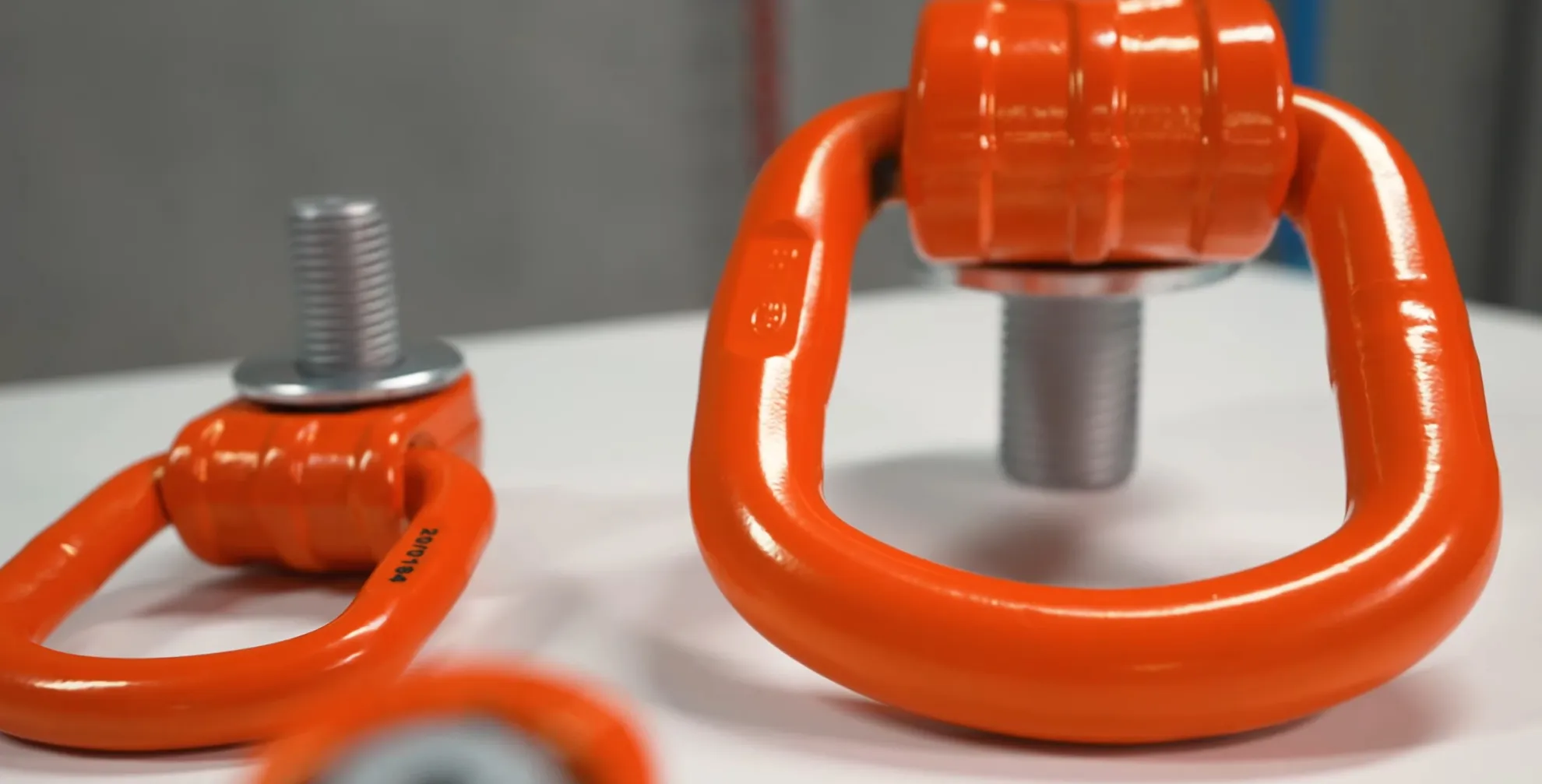
Thanks to its patented spring mechanism, both the ring and the entire lifting point are held securely in the desired position.
Like every pewag lifting point, each PLAW carries an individual serial marking, so it can be traced and its inspection history recorded throughout its service life.
What is the pewag PLAW lifting point?
The PLAW is part of pewag’s winner pro points range of screw-in lifting points, alongside the PLGW gamma, PLDW delta, PLOW omega, PLTW theta, and PLZW zeta. On the other lifting points in the range, the ring sits centrally above the bolt. On the PLAW, the ring is offset (decentralised).
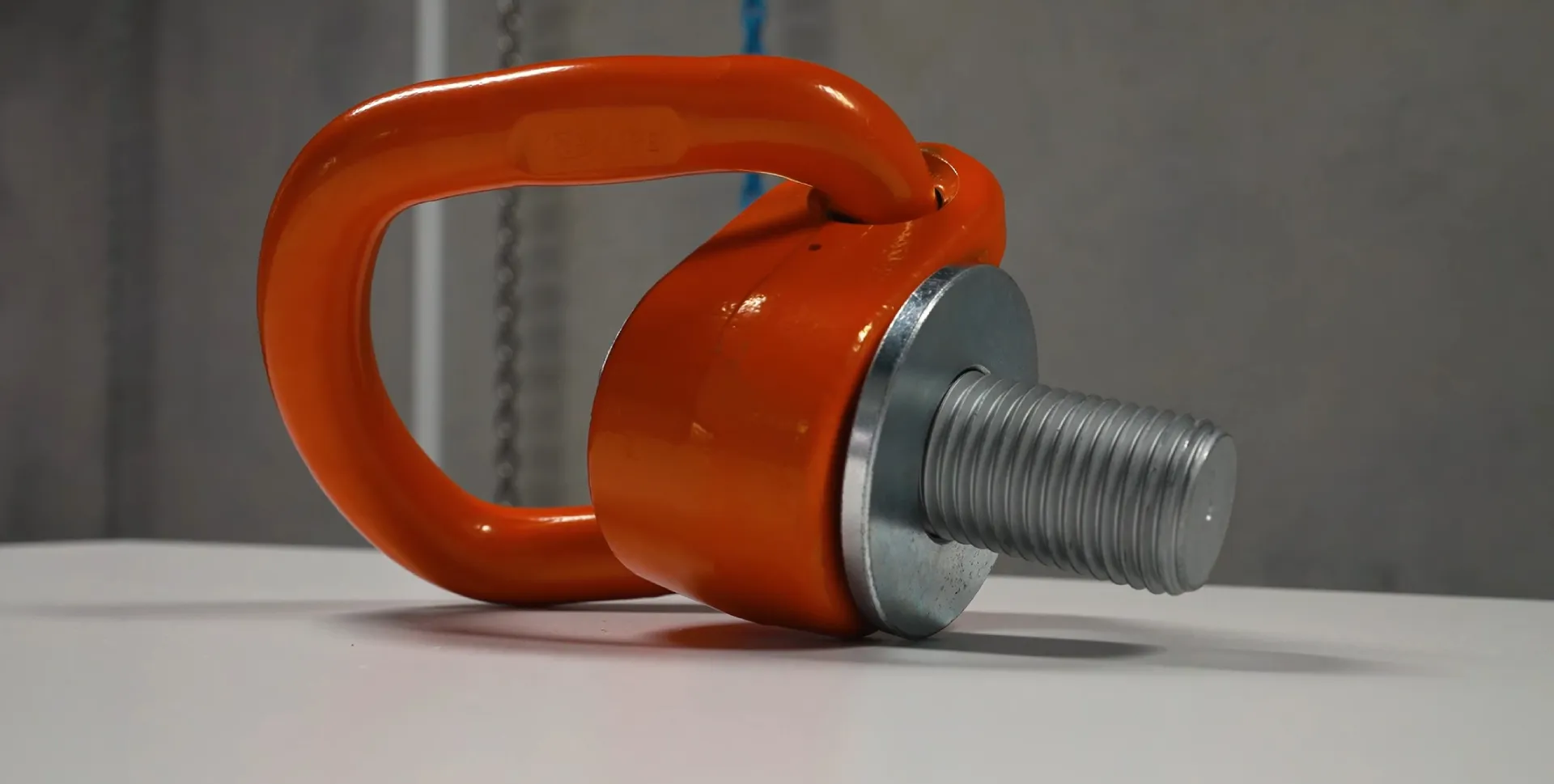
Thanks to its flat design and the fact that both the ring and body remain in any selected position, PLAW is particularly suitable for side mounting applications.
This offset ring is what the PLAW is built for. Its most common use is tilting loads: turning a component, a mould or a machine part from one position to another.
Key features of the PLAW lifting point
- Offset ring for tilting loads. Unlike the central ring on other pewag lifting points, the PLAW’s ring is offset. This is what makes it the right choice for tilting and turning loads.
- 360° rotation before lifting. The ring rotates around the bolt axis, so it can be turned to face the direction of the load before the lift. It must not be rotated under load.
- Pivoting ring. The load ring pivots and is held in position by a replaceable spring.
- Easy Bolt Replacement: Thanks to the patented bolt-sleeve connection, the bolt can be easily replaced when required, independently of the ring.
- Zinc flake coated bolts. The zinc flake coated bolts and powder-coated ring and body protect against corrosion.
- Integrated sleeve: The sleeve protects the load surface from scratches during installation and removal.
- Four-fold safety factor. PLAW lifting points are rated to a 4:1 safety factor against breakage across their permitted directions of load.
- Individual serial marking. Every pewag lifting point, the PLAW included, carries its own serial number. Each one can be traced, and its inspections recorded against it. The screw head is also marked with the working load limit and thread size.
- Metric and UNC threads. Available from M8 to M48 in metric and from 3/8″ to 1 3/4″ in UNC, with custom and maximum thread lengths on request.
- Optional peTAG and PIP. Like other winner pro points, the PLAW can be specified with an NFC peTAG chip for digital inspection records, or a PIP colour-coded plug for visual inspection tracking.
Set the ring in the direction of the load before lifting
The PLAW does not rotate under load, and it does not align itself. Before every lift, the user must turn the ring so it faces the direction of the load. Once the load is taken, the ring must not be turned.
This matters because the working load limit depends on how the lifting point is loaded. The working load limit tables in the operating manual give the capacity for each configuration, including straight pull, lateral pull and multi-leg slings at different angles.
If a lift needs the lifting point to rotate while under load, choose a ball-bearing lifting point instead: the pewag PLDW or PLOW.
Where it’s used
The PLAW is mainly used for tilting loads, where a component has to be turned during handling. Typical settings are general engineering, manufacturing and machine building. With a wide range of thread sizes and lengths, it also serves as a permanent, rated attachment point on equipment, in place of a temporary shackle or strap.
Working load limits run from 300 kg to 20,000 kg (metric range), covering everything from small components to heavy machinery and mobile plant.
The PLAW lifting point at a glance
| Feature | Detail |
|---|---|
| Ring | Offset (decentralised), for tilting loads |
| Rotation | 360° around the bolt axis; set before lifting, not under load |
| Marking | Individual serial number; WLL and thread size on the screw head |
| Bolt | Grade 10.9, 100% crack-tested, replaceable |
| Corrosion protection | Zinc flake coating |
| Thread range (metric) | M8 – M48 |
| Thread range (UNC) | 3/8″ – 1 3/4″ |
| Safety factor | 4:1 |
| Working load limit | 300 kg – 20,000 kg |
| Options | peTAG (NFC) or PIP colour-coded plug |
Summary
The PLAW alpha lifting point brings together an offset ring for tilting loads, individual serial marking, a 100% crack-tested bolt and zinc flake corrosion protection in one screw-in lifting point. Set the ring in the direction of the load before each lift, and it gives a secure, traceable connection for turning and tilting work.
Discover More

How the pewag levo Load Compensator was used to level and precisely position prefabricated balconies on a finished 23-storey tower in Haarlem.

The opening of pewag’s new production facility in the Czech Republic was a chance for team members and customers to get together.

pewag forestry tracks are engineered to deliver reliable grip on forest terrain. Explore the bluetrack range.