








The Real Cost of an Earthmover Tyre Blowout and How Tyre Protection Chains Change the Maths
For mining operations managers, fleet managers, and procurement leads
Picture the scene. It’s mid-shift at an open-pit copper mine. A big wheel loader has stopped dead in the pit. Not delayed. Stopped. A tyre blowout has taken it out of service, and within minutes the knock-on effects are already spreading upstream: the crusher is slowing, the conveyor is running light, and the processing plant downstream is dropping below capacity.
The operations manager’s first instinct is to reach for the tyre cost. That’s the bill, right? Get a replacement ordered, get the truck back on the road, and absorb the hit.
Here’s the problem: the replacement tyre is just the beginning of the invoice. The full cost of an unplanned earthmover tyre blowout is an order of magnitude higher and most operations are significantly underestimating it. Understanding the true figure is what makes the investment case for tyre protection chains (TPCs) not just compelling, but financially self-evident.
This article will walk through every layer of that true cost, then show precisely how pewag tyre protection chains rewrite the equation.
The Surface Cost Everyone Knows and Underestimates
Start with what most people do reach for first: the purchase price of the tyre.
Mining tyres routinely exceed $50,000 each. A typical loader runs on four tyres, making a full set of ultra-large tyres for a big loader a $200,000 change-out.
But the purchase price isn’t the real problem. The real problem is frequency. Inadequate tyre management can shorten service life by 30–50%, pushing unplanned replacement costs at large sites towards seven figures annually. A well-maintained tyre has an expected service life of 9,000 to 12,000 hours; poor conditions can destroy that projection.
Then there’s availability. The global supply of specialist earthmover tyres is constrained. A blowout doesn’t just cost the price of the tyre, it costs the lead time. An emergency sourcing situation in a constrained market adds weeks to the production gap, compounding the cost well beyond the day of the incident.
The Hidden Costs That Never Make It onto the Repair Order
This is where the real numbers live and where most operations are leaving substantial analysis undone.
Production downtime: the biggest line item
For operations, every hour of unplanned downtime carries a direct production cost of between $5,000 and $20,000. Mining operations industry-wide average 8.7 days of unplanned downtime year. At the higher end of that cost range, a single loader experiencing two days of blowout-related downtime represents a $480,000 production loss from the downtime alone.

The cascading effect
A single immobilised loader doesn’t just stop itself. In an integrated pit operation, a failure mid-cycle affects every system it feeds. Crushers slow. Conveyors run light. Processing plants fall below capacity. The production loss from a single major breakdown can reach $2 million for a single day once the cascading impact across the full production chain is accounted for. One truck. One blowout. One shift.
Labour: the tyre change no one budgets for properly
Changing a tyre on an ultra-class loader is not a quick job. Depending on position and access, it can take up to eight hours and requires a specialist crew. That labour cost is directly additive to the tyre replacement cost and it comes with a significant safety dimension.
Tyre-related maintenance on heavy equipment accounts for a disproportionately high rate of fatalities compared to other maintenance activities with fatality risk up to ten times higher than during other equipment maintenance tasks. Every unplanned blowout is not just a financial event: it is a safety event that puts crew at risk in the working face.
Emergency procurement premium
An unplanned blowout rarely allows operations managers time to source through normal purchasing channels. Emergency procurement carries a meaningful premium over planned purchase pricing and on a tyre that already costs $50,000 or more, even a modest percentage uplift is a material number.
The truck’s second-order costs
While the tyre is off the heavy equipment, the heavy equipment itself is accumulating idle time against its ownership cost. A heavy equipment represents a $5–8 million capital asset. A well-maintained heavy equipment has an operational life of 100,000 to 150,000 hours; poor maintenance and unplanned failures can degrade performance by 30–50% and force premature replacement one or two years early: an additional cost of $5–8 million per unit.
Building the True Cost of a Single Blowout
The table below brings the cost layers together as an illustrative scenario: one unplanned blowout on heavy equipment at an open-cast mine. Figures are drawn from published industry data and presented as ranges.
| Cost Component | Illustrative Range |
|---|---|
| Replacement tyre (purchase price) | $40,000-$75,000 |
| Emergency procurement premium | $5,000-$15,000 |
| Tyre change labour (8 hrs, specialist crew) | $2,000-$5,000 |
| Lost production (truck down, 1-2 days) | $40,000-$100,000 |
|
Cascading production loss (crusher, conveyor, plant) |
$20,000-$80,000 |
| Idle capital cost on truck asset | Difficult to quantify |
| Plausible total per incident | $107,000-$274,000+ |
A single site experiencing multiple unplanned blowouts per month can quickly approach seven-figure annual losses from tyre failures alone. One documented case from a South African platinum mine found unplanned tyre replacement costs reaching $1.8 million in a single year.
How Tyre Protection Chains Rewrite the Equation
With the full cost of a blowout on the table, the investment case for tyre protection chains stops being a sales conversation and becomes a straightforward financial analysis.
The life extension multiplier
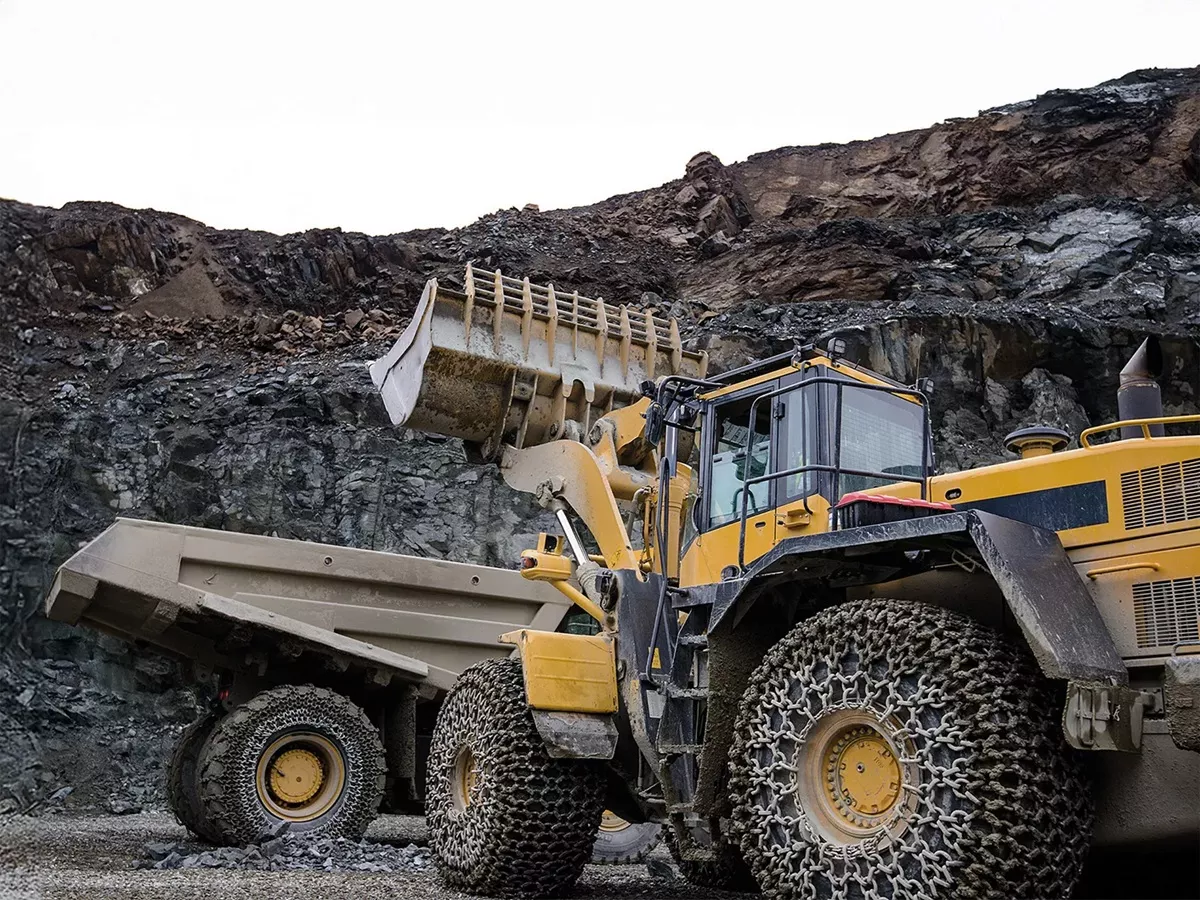
The core function of a tyre protection chain is to place a sacrificial steel mesh barrier between the tyre and the terrain. This barrier absorbs and distributes the impact of sharp rocks, metal shards, and abrasive surfaces that would otherwise cause immediate or progressive tyre damage.
The result in tyre life terms is dramatic. Operators across mining, quarrying, and heavy earthmoving regularly report tyre life extensions of 200–300% when running chains. In one independently documented limestone quarry case study, a wheel loader’s tyre service life increased from 1,200 hours to 12,000 hours following TPC installation a tenfold improvement while tyre cost per operating hour fell by 78%.
Consider the implications for a $300,000 tyre set. If chains extend the effective life of that set by three to five times, the annualised tyre cost per operating hour drops to a fraction of its unprotected equivalent often well below the annualised cost of the chains themselves.
Blowout prevention, not just wear reduction
Reducing wear is valuable. Preventing the sudden catastrophic failures that generate the $107,000–$275,000+ incidents described above is transformative.
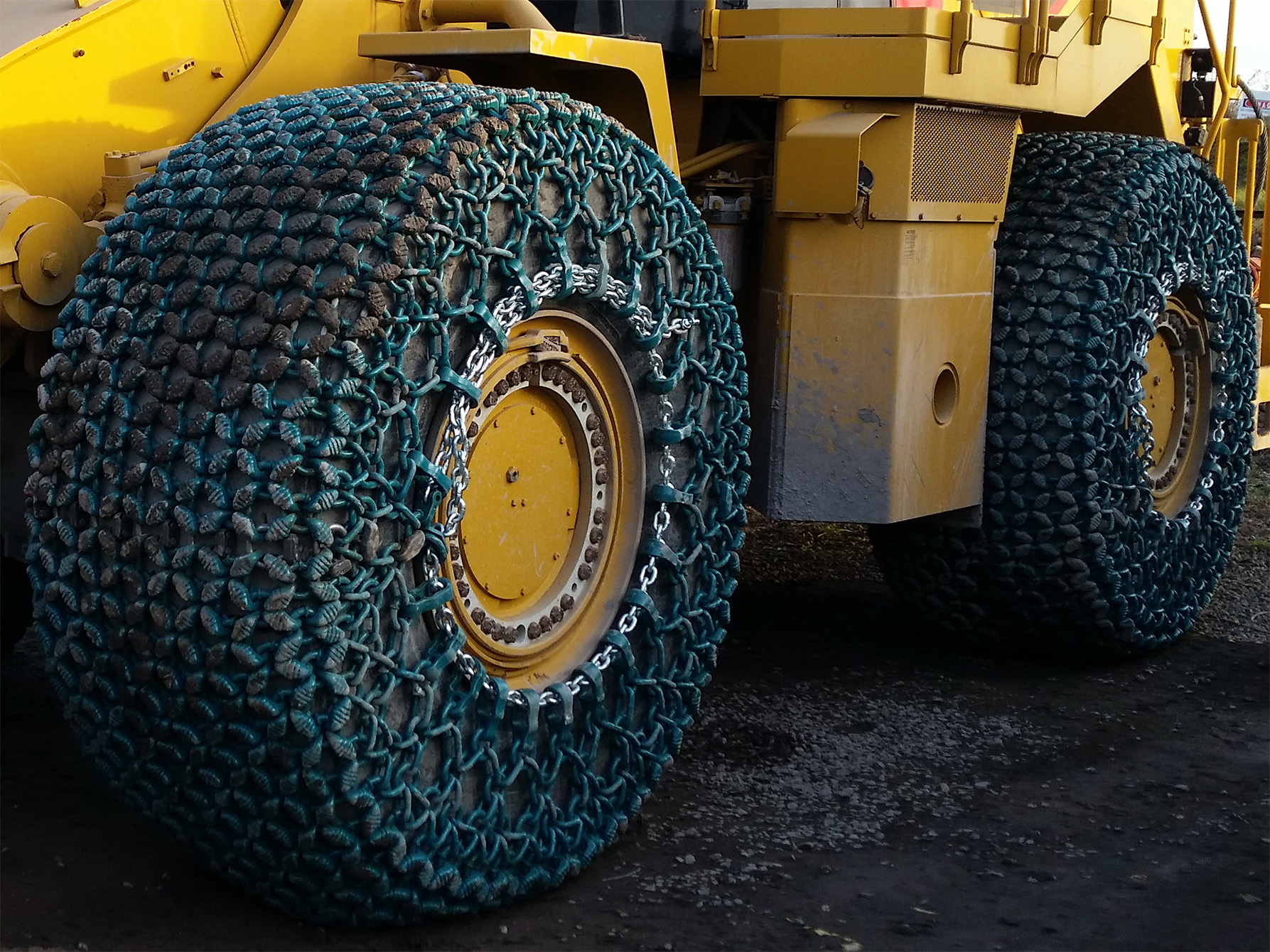
pewag tyre protection chains wrap both the tread and sidewall of the tyre in a hardened steel mesh that deflects and absorbs impacts before they reach the rubber. In open-cast mining, they guard against the sharp rock surfaces and debris that cause immediate structural failure. In underground mining and tunnelling, they protect against tunnel wall contact and abrasive floor surfaces. In quarrying and slag handling, they maintain tyre integrity in conditions where unprotected tyres routinely fail.
The fuel and traction bonus
A protected tyre maintains consistent contact geometry and traction throughout its extended service life. Better traction means less wheel slip and lower fuel consumption per cycle. For a fleet running haul cycles 24 hours a day across a full year, the aggregate fuel saving is a meaningful operational benefit on top of the tyre protection itself.
Field evidence on cost reduction
Across documented field deployments, tyre protection chains consistently deliver measurable financial returns:
- In one mining operation, tyre life increased by 40% and tyre replacement costs were reduced by 50% following TPC deployment.
- A heavy machinery fleet operating in harsh ground conditions reduced monthly maintenance time by 35% and increased production capacity by 20% after fitting chains.
- In certain mining environments, TPCs have been shown to reduce per-tonne operational costs by as much as 76% making them one of the highest-ROI consumable investments available to a mining operation.
The Safety Dimension: a Cost You Cannot Put a Number On
Every statistic in this post has a safety counterpart. Tyre maintenance on heavy equipment is one of the most hazardous activities on a mine site, with fatality rates during tyre-related tasks up to ten times higher than during other maintenance activities.
Fewer blowouts mean fewer emergency tyre changes. Fewer emergency tyre changes mean fewer crew dispatched into the working face under unplanned conditions, with less preparation time and greater pressure to restore production quickly. The safety case for tyre protection chains is inseparable from the financial case.
For operations with ESG commitments and duty-of-care obligations, increasingly central to procurement decisions at institutional mining groups, this dimension is not peripheral. It is part of the core value proposition.
How to Make the Investment Case Internally
For operations managers who need to justify TPC spend to a finance director or site general manager, a simple framework works well:
- Calculate the average number of unplanned tyre incidents your site experienced in the last 12 months. Most operations have this data in their maintenance records.
- Apply a conservative total cost per incident using the components above. Use $107,000 as the floor and adjust upwards for your fleet size and operation type.
- Get the annualised cost of a pewag TPC set for your fleet configuration and terrain; our specialists can provide this directly.
- Compare. In most cases, a single prevented blowout covers the chain investment for the full year.
The upfront capital requirement for tyre protection chains is real, and we acknowledge it directly. But TPC deployment consistently delivers tyre cost savings of up to 50% at the site level and the payback on a single avoided catastrophic failure is typically measured in days, not years.
The Bottom Line
A tyre blowout costs far more than a tyre. Once you account for downtime, cascading production loss, labour, emergency procurement, and the compounding impact on a multi-million-dollar capital asset, the true per-incident cost sits comfortably between $107,000 and $275,000 and often higher.
Tyre protection chains don’t prevent all tyre damage. What they do is eliminate the category of sudden-death failures that create those six-figure incidents, while simultaneously extending tyre service life to a degree that fundamentally changes the per-hour economics of tyre ownership.
The question isn’t whether you can afford to fit them. It’s whether you can afford not to.
Ready to understand the chain specification for your fleet and terrain? Speak to a pewag tyre protection chain specialist, explore our product range, or download the pewag TPC catalogue.
Discover More
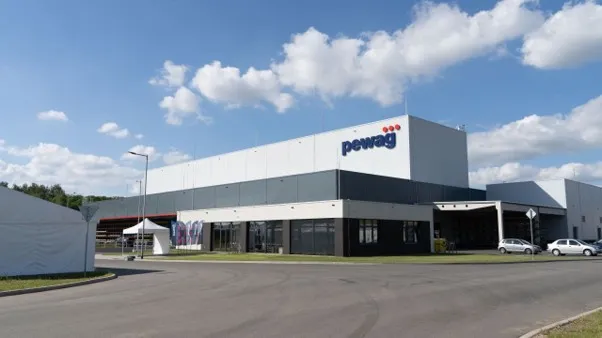
The opening of pewag’s new production facility in the Czech Republic was a chance for team members and customers to get together.

pewag forestry tracks are engineered to deliver reliable grip on forest terrain. Explore the bluetrack range.
The latest innovation in chain slings is here. Introducing the G12 Plus range from pewag.