


Steel: Why It’s One of the World’s Most Reusable Engineering Materials
Steel: Why It’s One of the World’s Most Reusable Engineering Materials
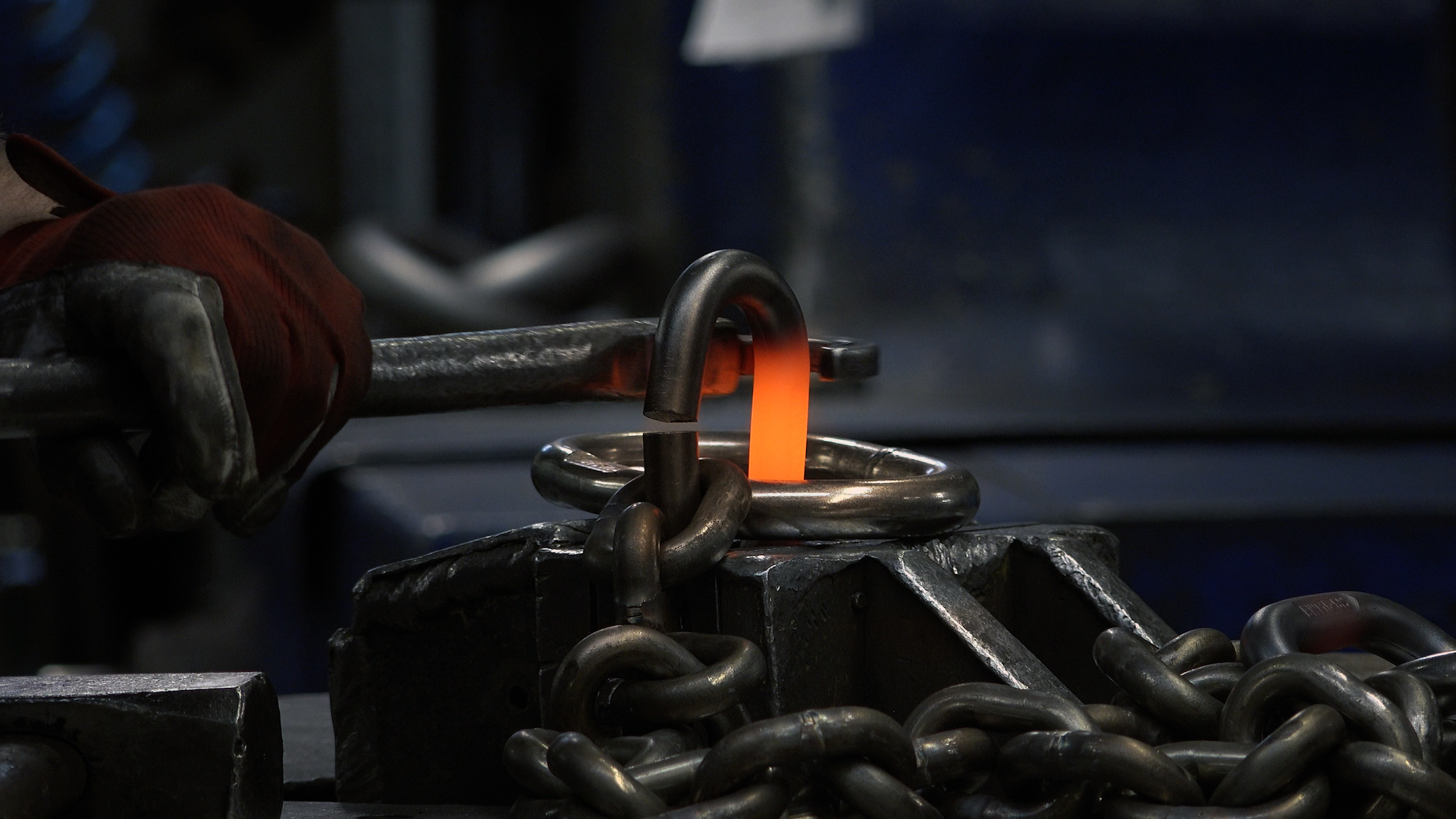
From lifting chains and shackles to conveyor systems and tyre protection chains, many of pewag’s products are made from steel. Steel’s strength and durability are well known, but you may be surprised at just how sustainable it is.
Steel is, by a wide margin, the world’s most recycled industrial material. Unlike plastics, which lose strength and quality with every reprocessing cycle, steel can be melted down and reformed indefinitely without any degradation in its mechanical properties. That’s why steel sits at the centre of a genuinely circular manufacturing model.
Why Steel Can Be Recycled Without Losing Its Properties
To understand why steel is such an effective material for circular manufacturing, it helps to know what actually happens when it’s recycled.
Steel is an alloy, made up primarily of iron with a small amount of carbon. When steel scrap is melted down, the iron atoms don’t break down or change their fundamental nature – they’re simply released from one crystalline structure and reformed into a new one as the metal cools. It’s a physical transformation, not a chemical one, so the resulting steel is structurally identical to the material that went in.
This is very different from how most other common materials behave. Plastics, for example, are built from long polymer chains that shorten and weaken every time they’re reprocessed, which is why recycled plastic is typically “downcycled” into lower-grade applications rather than reused for the same purpose.
Steel doesn’t have that limitation. Any batch of recycled steel can be returned to the highest-grade application, including structural beams, load-bearing chains, or precision-engineered components, provided the composition is properly managed during melting.
That quality control happens in a stage called secondary steelmaking, where fluxing agents such as lime are added to the molten bath to remove “tramp elements” like copper or tin that could otherwise affect the final steel’s performance. Get that process right, and there is effectively no limit to how many times a given tonne of steel can be melted down and reused.
Steel’s magnetic properties also make it unusually easy to recover from the general waste stream. Ferrous scrap can be separated from other materials quickly and cheaply using magnets, which is one of the reasons steel recycling infrastructure is so well established compared with other materials and one of the reasons steel is consistently the world’s most recycled material by tonnage, more than paper, plastic, aluminium and glass combined.
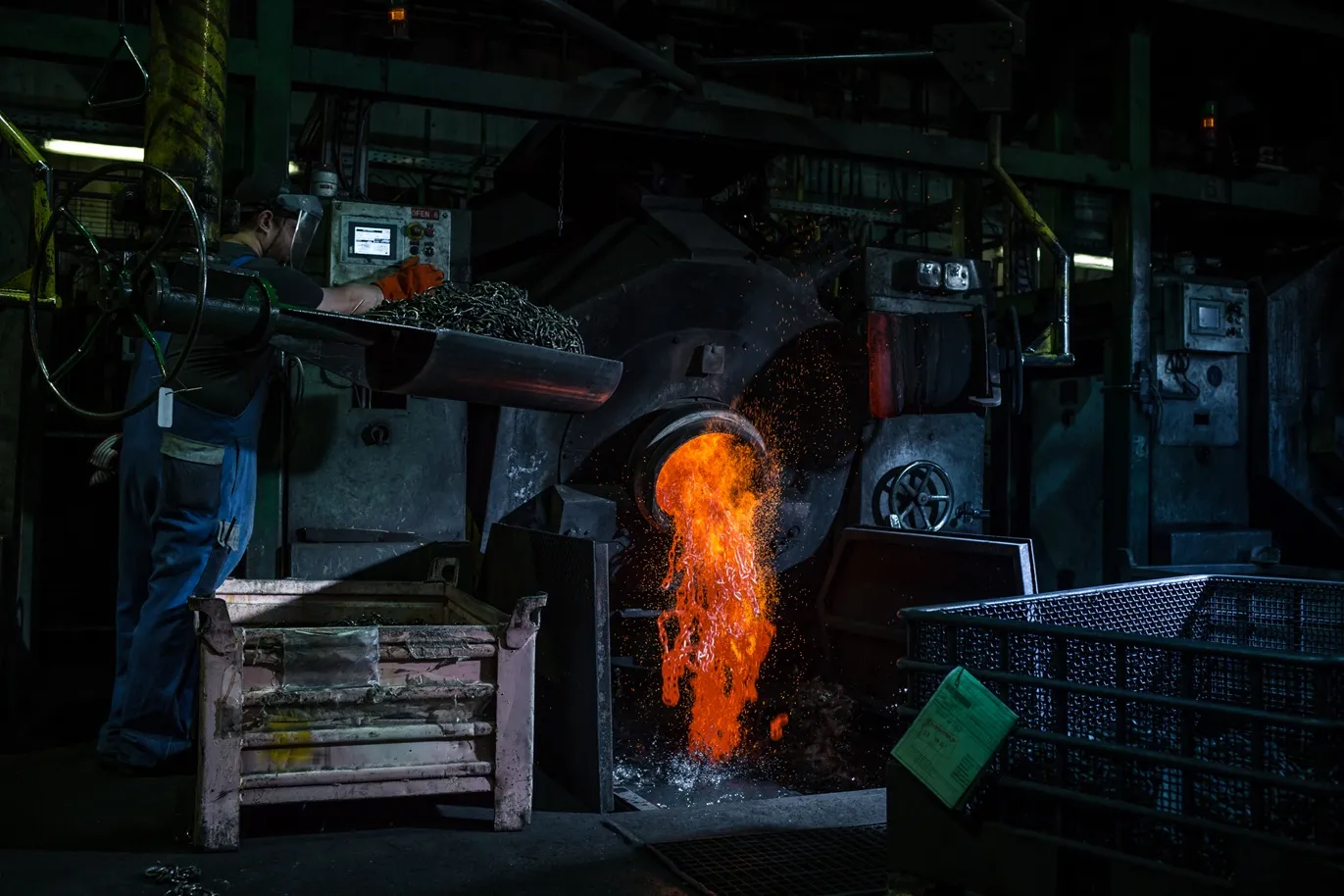
The Environmental Case for Recycled Steel
The environmental savings from using recycled steel over virgin material are substantial and well documented:
Producing steel from scrap requires an estimated 60–75% less energy than producing it from virgin iron ore.
Every tonne of recycled steel avoids the need to mine approximately 1.4 tonnes of iron ore, along with the associated coal and limestone.
More specifically, recycling a single tonne of steel is estimated to conserve around 2,500 pounds of iron ore, 1,400 pounds of coal, and 120 pounds of limestone, plus all the energy that would otherwise go into mining and transporting them.
In the UK specifically, the overall average end-of-life recovery rate for steel from buildings has been estimated at 96%, based on industry surveys and because this is true closed-loop recycling, every tonne of scrap recovered substitutes one tonne of primary steelmaking, again and again, without any drop in performance.
Recycling rates are similarly high across other steel-heavy sectors: around 95% for end-of-life vehicles and more than 90% for appliances, driven by steel’s high economic scrap value as much as by regulation.
How This is Demonstrated in pewag Group’s Own Operations
Steel and its recyclability sit right at the centre of pewag group’s resource use and circular economy strategy, as set out in our latest Sustainability Report. A few figures from the 2025 reporting year illustrate what that looks like in practice:
pewag Austria GmbH and its subsidiaries generated 3,466 tonnes of waste in 2025, of which 83% was recycled – consistent with the 80% recycling rate achieved the previous year.
Of that recyclable waste, steel scrap accounted for 2,030 tonnes – by far the largest single recovered material stream, ahead of paper and cardboard, wood, plastic, and other recyclables combined.
Total resource inflows for production stood at 23,995 tonnes, the large majority of it steel and aluminium sourced regionally wherever possible.
pewag’s products: lifting solutions, tyre protection chains, forestry chains, conveyor systems and hoist chains are deliberately engineered for a long service life, with spare parts and repair services extending that lifespan further and improving recyclability at end of life.
In 2025, pewag launched pewag recycling, a pilot project giving used textile lifting accessories a second life: customers can return selected products to the company’s Austrian headquarters, where the materials are processed together with external partners and recovered resources are redirected into new applications such as insulation solutions.
Packaging is designed with the same circular thinking: pewag’s wooden crates are intended for multiple reuse cycles rather than single use.
None of this happens by accident. It’s built into pewag group’s stated approach to resource use and circular economy, which focuses on four principles: longevity, reusability, repairability and recycling with steel’s near-limitless recyclability doing much of the heavy lifting behind that strategy
You can read the full breakdown of pewag group’s resource use, waste, and circular economy performance, along with the rest of our environmental, social and governance data, in the 2025 Sustainability Report.
Discover More
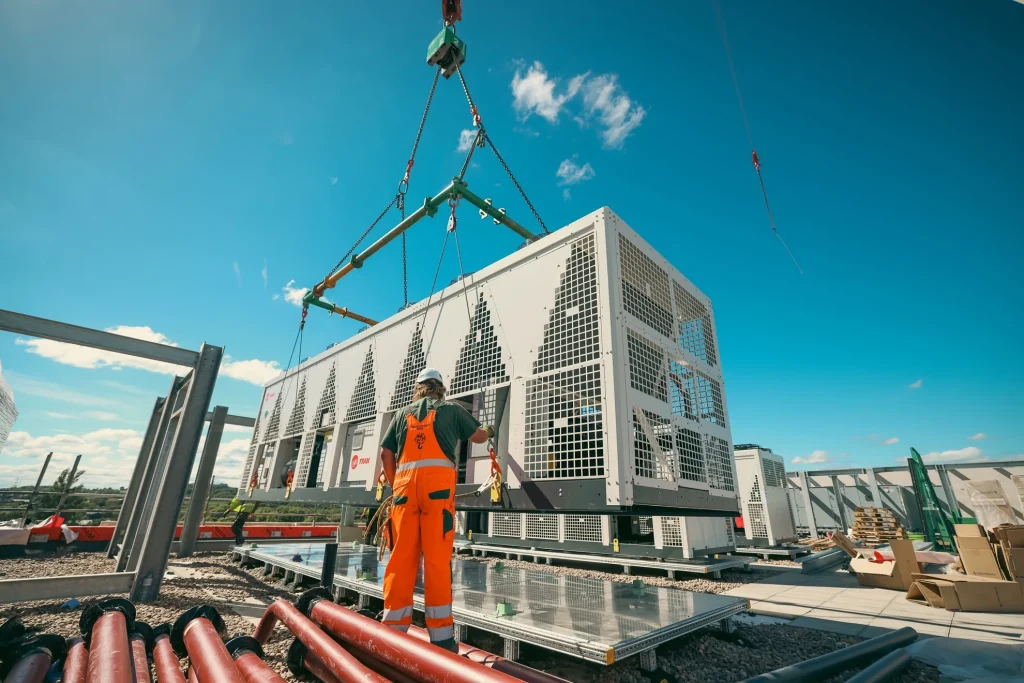
pewag supported in the safe list of a 7 tonne heat pump onto a roof in Oxford. The levo Load Balancer provided remote control of load imbalance.
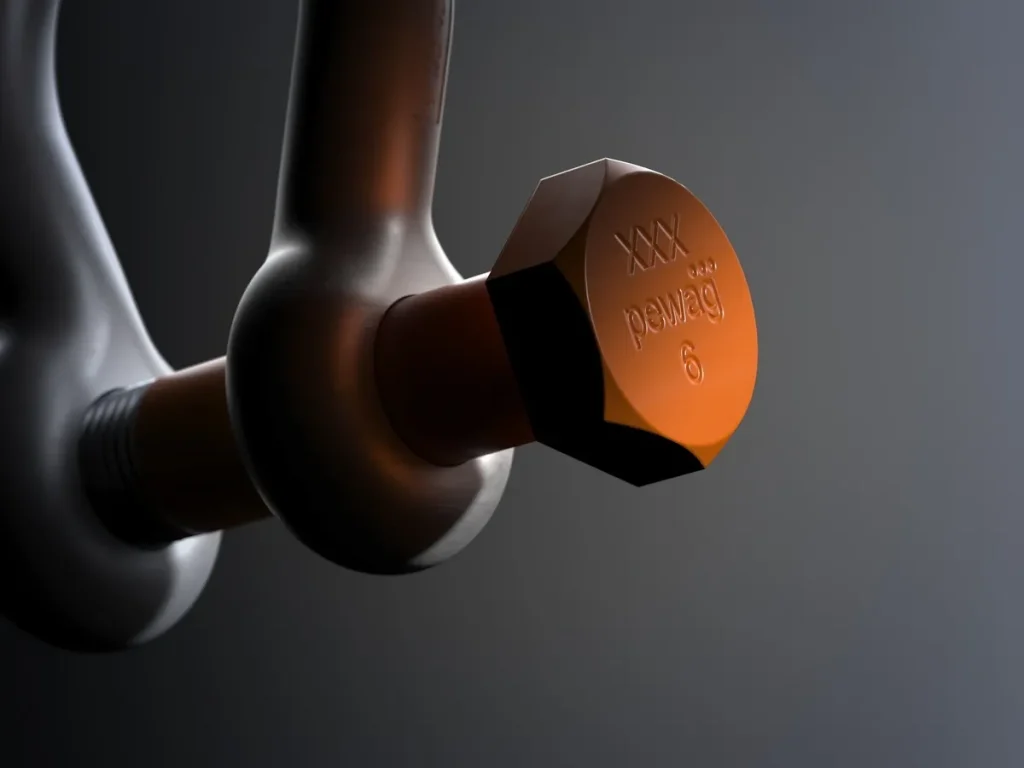
pewag’s new shackle range covers everyday lifting and rigging to extreme cold environments and commercial fishing operations.
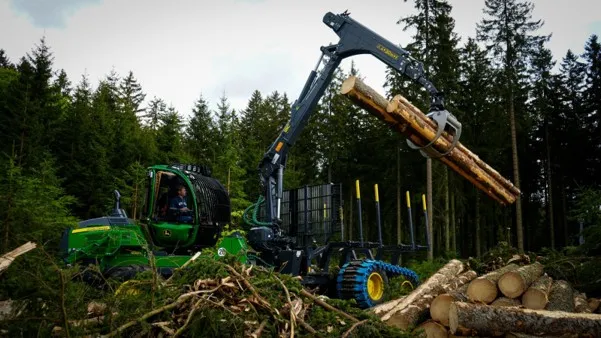
This article examines the key factors that drive the choice between chains and tracks for forestry vehicles.